Over the last 20+ years at work, we’ve seen this pattern show up again and again.
In a meeting, a leader says (and means it), “We really need to focus on work–life balance this
quarter. Burnout is real.” Everyone nods.
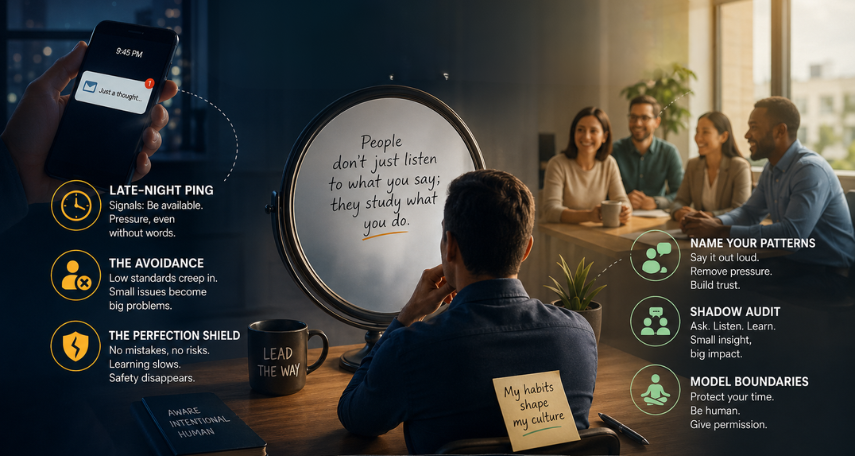
Then later that same Tuesday, around 9:45 p.m., your phone buzzes. It’s an email from that
same leader. Not urgent. Just a thought, they didn’t want to forget.
You weren’t planning to work. But now you pause: Do you reply? Ignore it? Will it look bad if you leave it for the morning? That pause is where culture actually lives.
That pause is where culture actually lives.
Teams don’t just listen to what we say; they study what we do. They notice how we behave
when we’re under pressure, what we reward, what we tolerate, and how we handle
mistakes. Like it or not, our habits travel fast.
People naturally mirror the person in charge. That’s basic human behaviour, not a character
flaw
If the leader is constantly rushed, the team starts to feel anxious. If tough conversations are
avoided in the name of being “nice”, the team learns that honesty isn’t really welcome, even
if it’s written in the company values deck.
As leaders, we become the safety signal. When we’re always “on”, others feel they can’t
switch off. Without meaning to, we create an unspoken rulebook, built more on our actions
than our intentions.
Some leadership habits spread especially quickly.
The late-night ping. You may think you’re just clearing your head or staying organised. Your
team reads it as: “Be available.” Even if you add, “No need to respond”, the pressure is
already there; behaviour speaks louder than disclaimers.
The avoidance. Letting small issues slide can feel kind in the moment. But it quietly lowers
the bar. The team learns that standards are flexible, until one day they aren’t, and a small
issue becomes a bigger mess.
The perfection shield. When leaders never admit uncertainty or missteps, teams stop taking
risks. Mistakes get hidden. Learning slows down. Psychological safety erodes—quietly, then
suddenly
This isn’t about becoming a different person. It’s about being a little more intentional with
the signals you send.
Name your own patterns. If you tend to work late, say it out loud. For example: “I think best in the evenings, but I don’t expect the same from you. If I message late, please reply in
working hours.” That one line removes a lot of unnecessary pressure.
Do a “shadow audit”. Ask someone you trust: “What’s one thing I do that unintentionally
makes your job harder?” It’s not the easiest question to ask. But the answer is often the
fastest route to a healthier team culture.
Model boundaries, visibly. Say you’re blocking time for deep work. Mention you’re stepping
out for a personal commitment. When leaders give themselves permission to be human,
teams take the cue.
Leadership isn’t about perfection; it’s about awareness. Teams reflect what they see. If we want people who are honest, rested, accountable, and brave, we have to model those behaviours ourselves, especially when it is inconvenient.
Our habits are contagious. It’s worth staying conscious and choosing which ones we’re
passing on.